How it works
Give Maestro a job. Here is every step.
Your AI team does the work. Maestro executes each task on the best model and the cloud that runs it, and checks the work. ZB Cloud runs what you build. Every step below, with the screens from our example build.
The workflow
Six steps. One workspace.
- 1
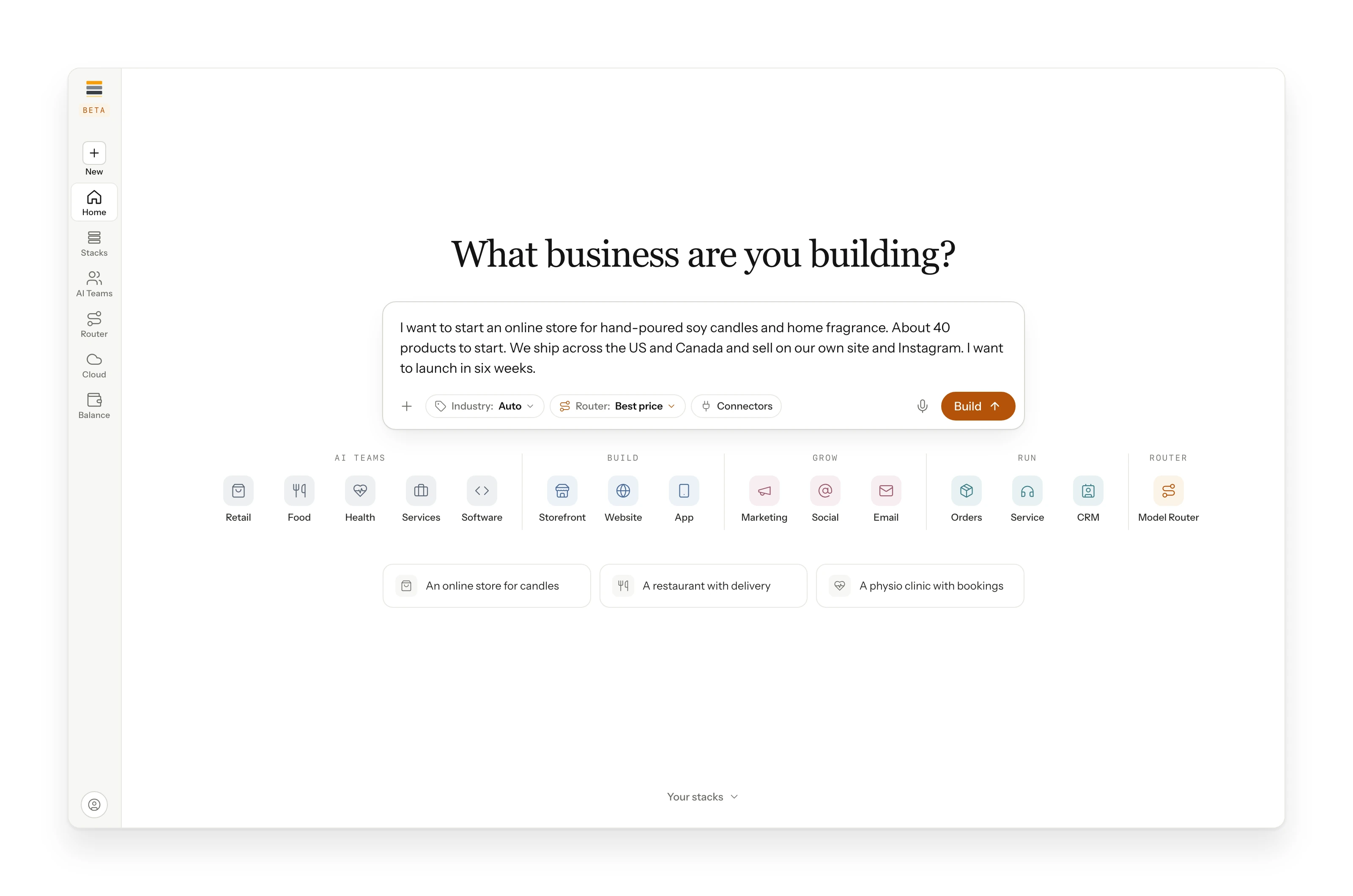
Describe it.
What you sell, who it serves, and what you need next. Plain words are perfect.
- 2
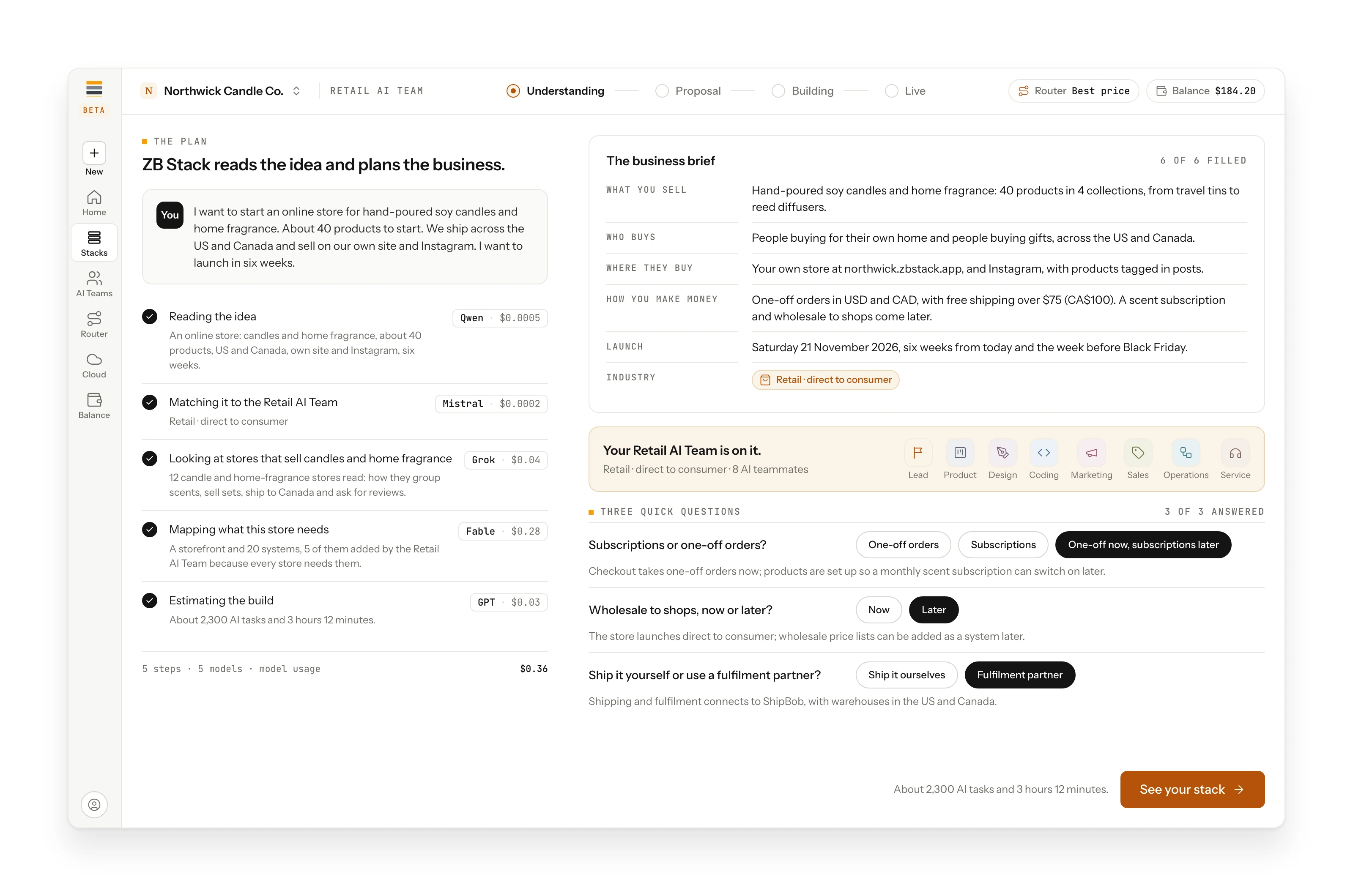
We play it back.
A short summary of your business. Correct anything before a plan is proposed.
- 3
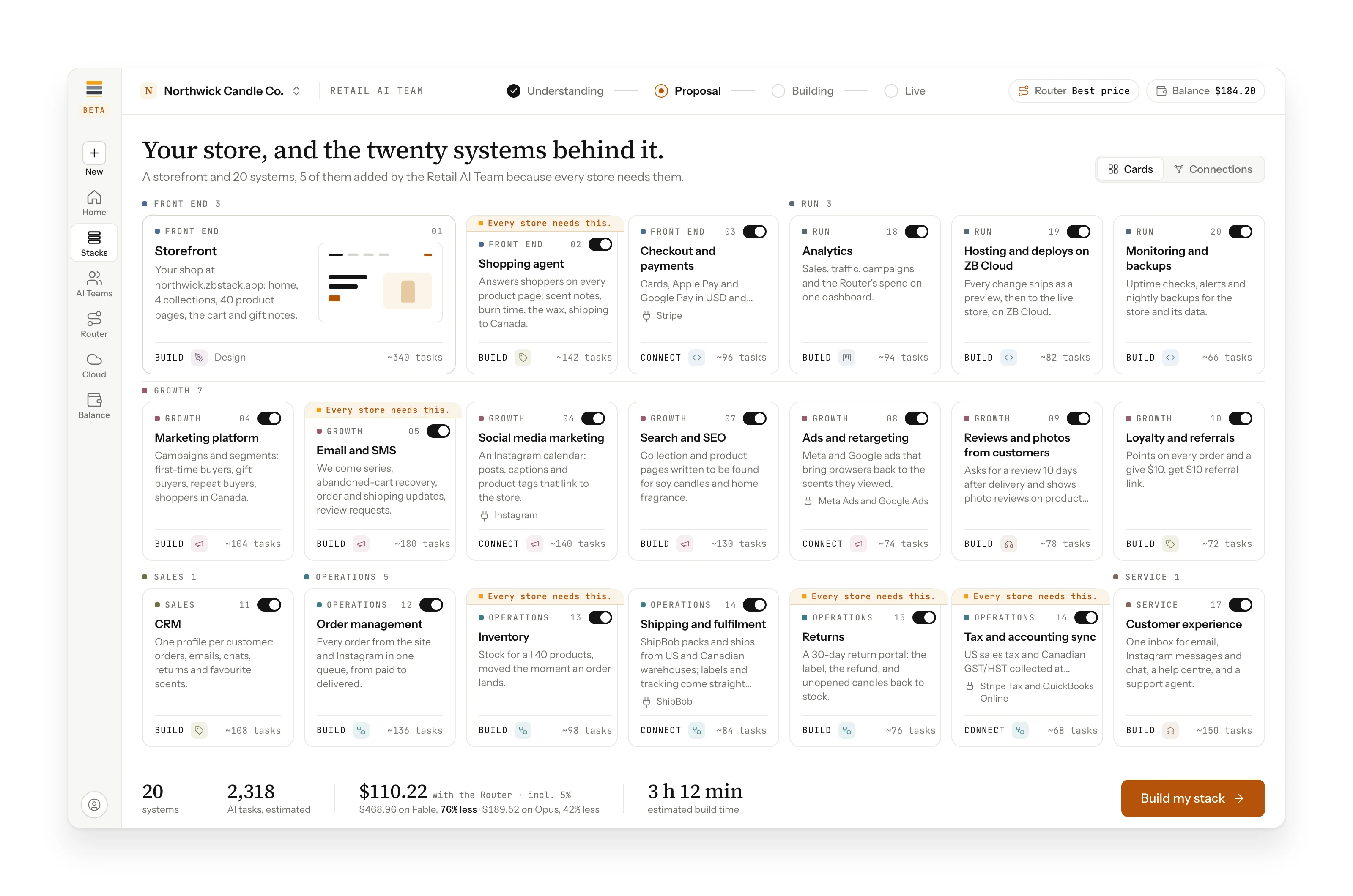
Choose the scope.
A list of the systems your business needs, what gets built or connected, and what each will cost. Switch one off and the total drops. Choose what to build first.
- 4
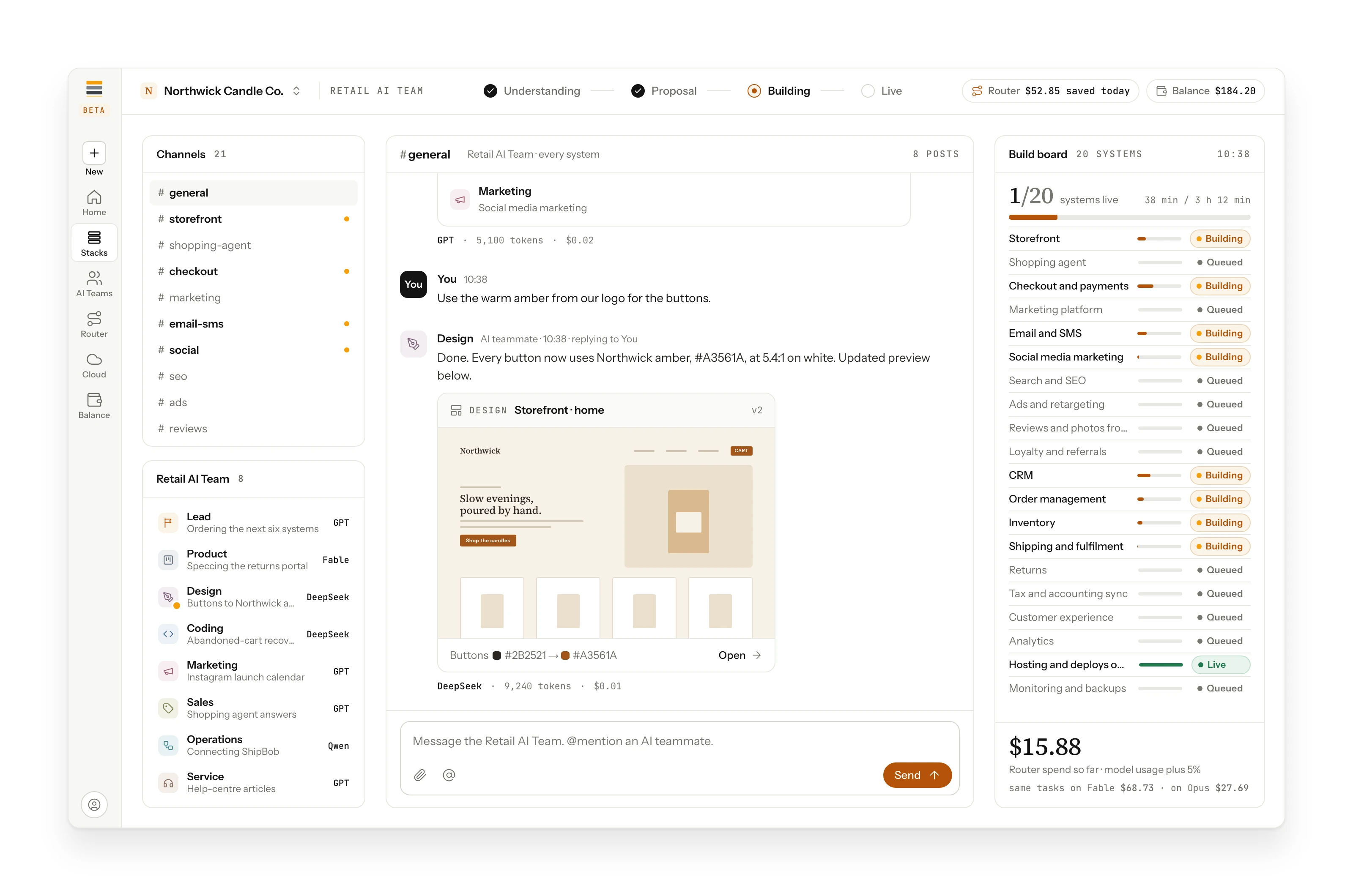
Work with your AI team.
Follow the work in shared channels. Plans, designs, code and check results appear as they finish. Ask for changes in the same place.
- 5
The work is checked.
Maestro routes each task to a model. A check reviews the result. If a check fails, only that task goes to a stronger model. You pay the higher price for that one fix, not the whole job.
- 6
Launch and track.
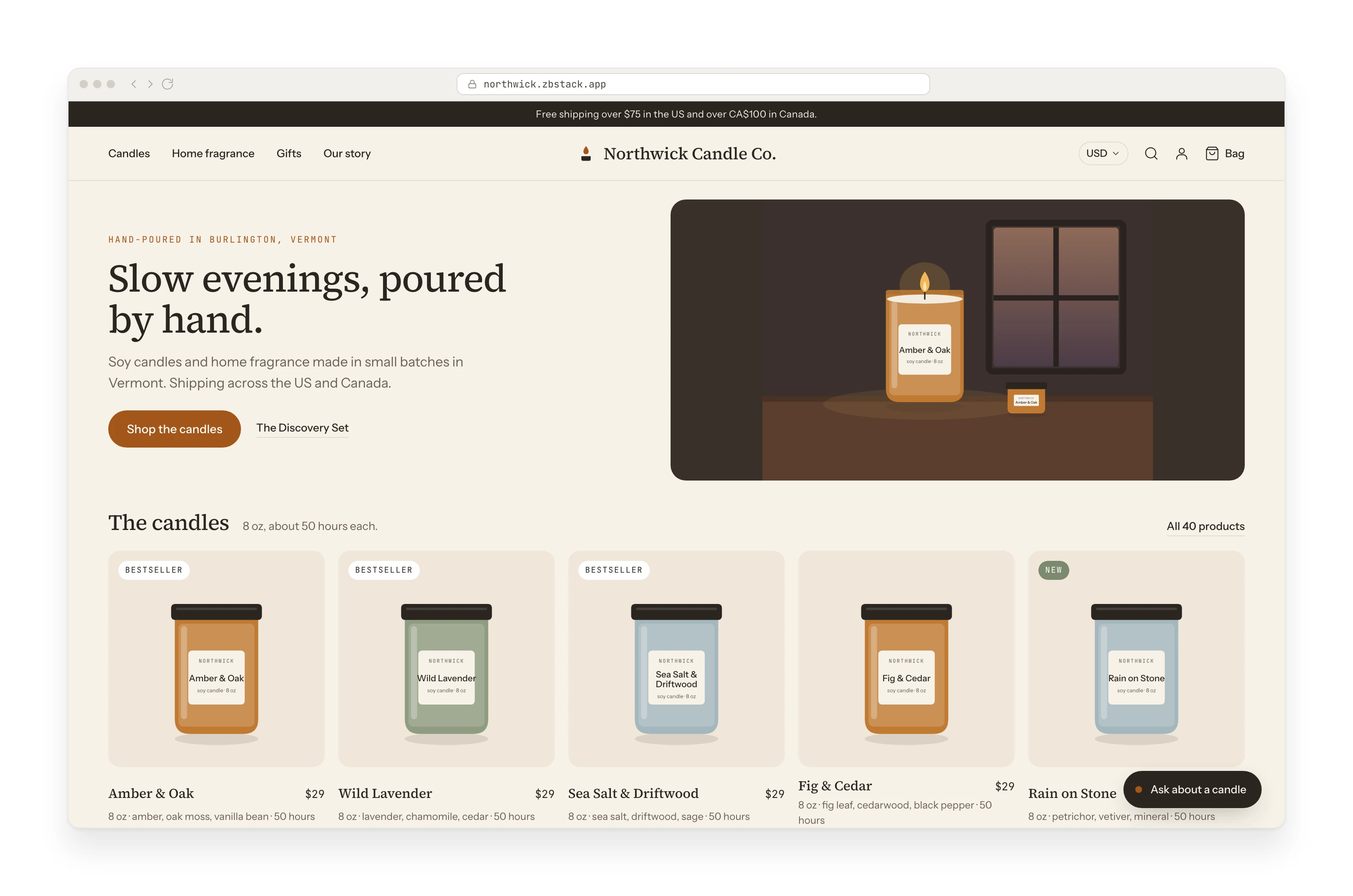
Approved work goes live on ZB Cloud, on the cloud chosen for that job by price, capacity and location. The record holds every task with its model, its cloud and its cost.
Architecture
How the parts work together.
The workspace holds your goals, plan and progress. Inside it, AI teams do the work. Maestro chooses the model and the cloud, and checks the result. ZB Cloud runs the build. Every result is checked by something that did not produce it.
You describe it in plain words: a business, a feature, a fix.
Your goals, the plan, the state of every system and the record. One business per workspace, one balance across every model.
Eight AI teammates. The Lead holds the plan, hands out each task, checks the result and adds it to the build. For each task the Lead creates a specialist and gives it only what that task needs.
Maestro routes every task to a model as it starts, from the fourteen on the board. Behind them: 300+ AI model endpoints across 14 leading model providers. Re-routes when a result fails its check.
Our cloud runs on every cloud. Each job goes to a global cloud, a sovereign cloud, a GPU cloud or a decentralized cloud, by price, capacity and location. When one of them changes, the job moves.
What every AI teammate draws on, and writes back to.
Technical detail: who does what, and how it is checked
| AI teammate | Specialists | Does | Checked by |
|---|---|---|---|
| Lead | Plan · Check · Record | The plan, the assignment of every task, the integration of every result, and the record | The read-back with you, and the record against the agreed scope |
| Product | Spec · Research · Roadmap | Requirements, priorities, the roadmap, and the product’s decision history | Review against customer needs and the plan |
| Design | Screens · Flows · Brand | Pages, flows, the interface, and the brand as customers see it | Review against the design brief and the spec |
| Coding | Build · QA · Security | Code and tests, the gates every change must pass, data boundaries and access | The test suite, and a separate review by a model that did not write the code |
| Marketing | Brand and content · Campaigns | The site, the messaging, the content, and the campaigns | Agreed measures of reach and response, in the record |
| Sales | Prospecting · Pipeline | Prospect research, outreach, qualification, and follow-up | Follow-ups and pipeline movement, in the record |
| Operations | Orders · Inventory · Finance · Admin | Orders, inventory, shipping, returns, the books, and the admin a company collects | Activity and cost reconciled against the plan |
| Service | Support · Feedback | Onboarding, answers, resolution, and what customers say | Resolutions and recurring problems, reviewed and fed to the roadmap |
| ZB Cloud | Deploy · DevOps | Releases and the path to live; hosting, monitoring and run cost | Agreed service targets and recovery checks; rollback armed on every release |
| Across all | Learning | Outcome capture, business memory, and improvement proposals | Measured results in the record, kept beside the projection |
The roster is open. When a task appears that no specialist covers, such as a payments integration or a data migration, the Lead creates a specialist for it. It gets only the context that task needs, and its work is checked the same way.
The AI team
An AI team that works from one plan.
The Lead breaks your goal into tasks, hands out the work, checks the results and records what happened.
Product keeps the priorities and the history. It reads what customers, sales and support say, and proposes what to change next. The AI team knows your industry, so it proposes the systems businesses like yours run on. Twenty for a store.
Meet the AI teammates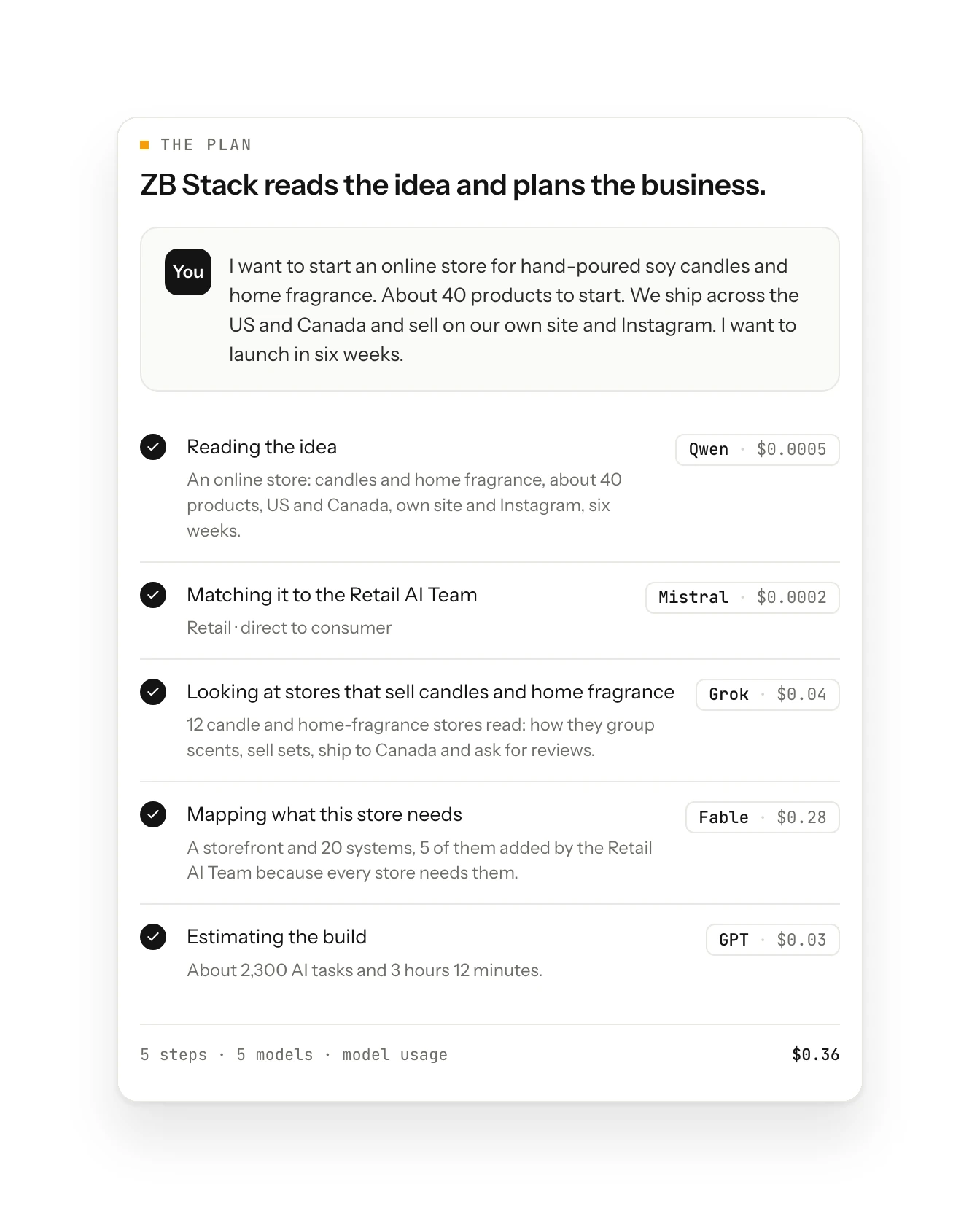
Which model, every task
Match the model to the task. Check what comes back.
Maestro breaks the job down into tasks and routes each one to a model as it starts. It checks every result and re-routes any that fails. It assembles the pieces, passing on what the last model learned, and learns from every task. A sponsored model costs nothing, so it takes every task it does well. Quality still decides.
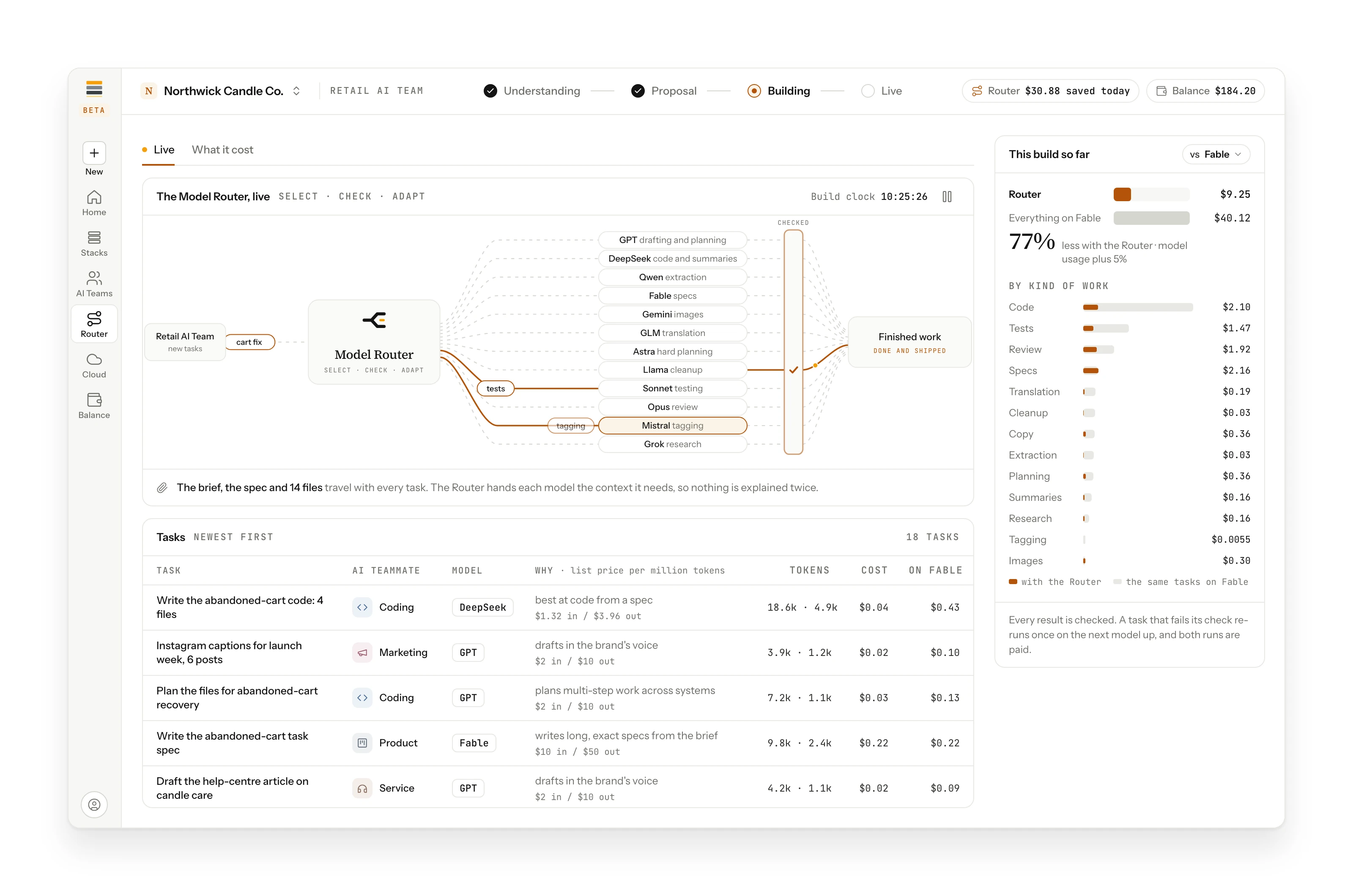
Four things pare the cost of tokens. The right model: every task goes to the cheapest model that does it well, and only the hard ones go to the top. The right cloud: the same model, on the cloud that runs it for less. The check: only a failure goes up to a stronger model and pays the top price. The learning: every task sharpens the next route.
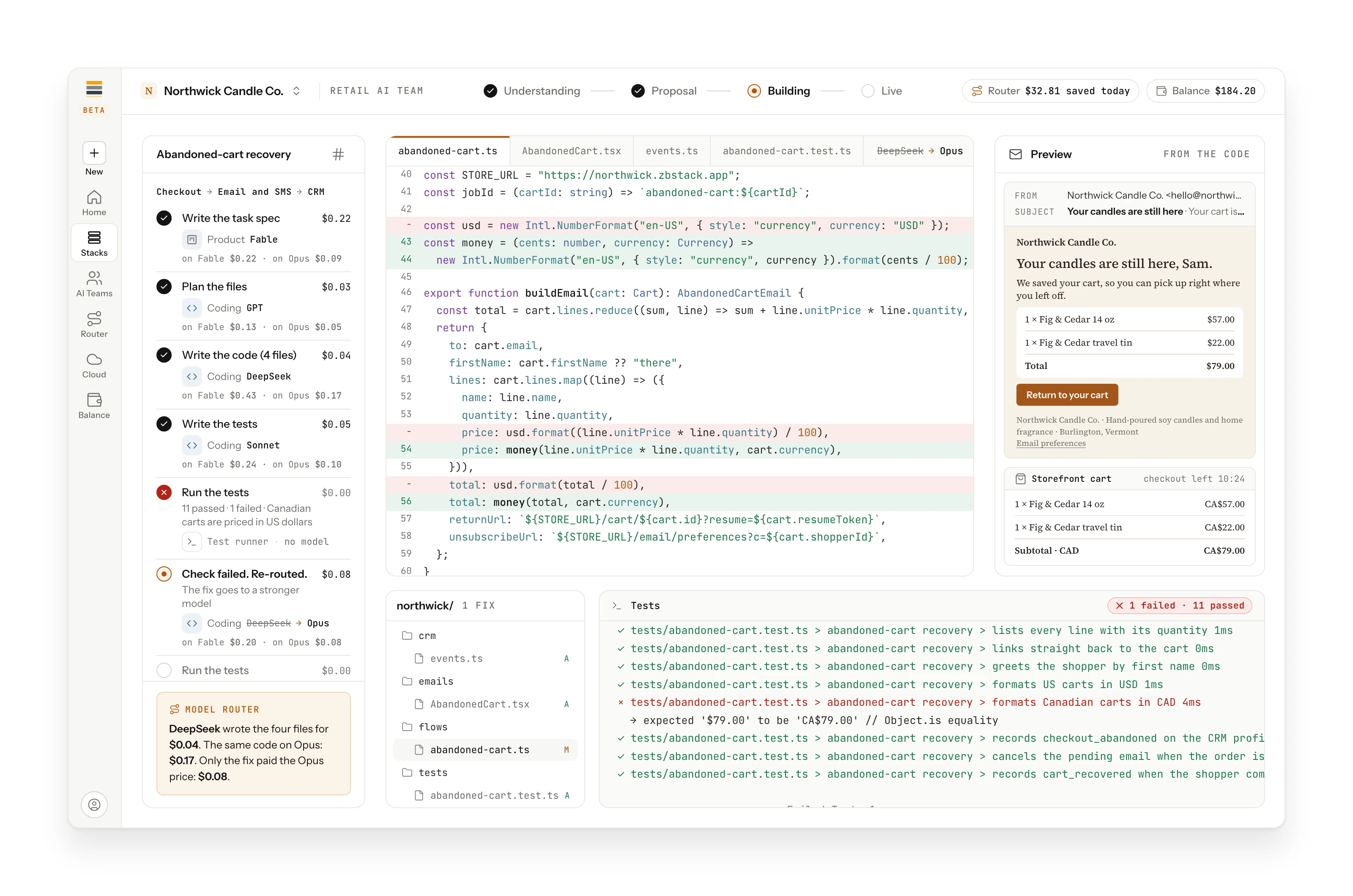
An abandoned-cart email, for a store that sells in two currencies.
Each step records its model and its estimated cost. One test fails. Only the fix moves to a stronger model.
Routine tasks go to the cheapest model that passes the checks. Complex tasks go to the strongest model for the job. Images go to a model that makes images. Failed checks send the task to another model, and the retry and its cost go in the record.
| Step | Model | Cost |
|---|---|---|
| Write the task spec | Fable | $0.22 |
| Plan the files | GPT | $0.03 |
| Write the code, four files | DeepSeek | $0.04 |
| Write the tests | Sonnet | $0.05 |
| One test failed. Re-routed to the next model up. | Opus | $0.08 |
| Review the change | Opus | $0.07 |
| Write the email copy and subject lines | GPT | $0.01 |
| Merge and deploy a preview | ZB Cloud | $0.00 |
| Total | $0.52 |
ZB Cloud
Launch it. ZB Cloud keeps it running.
Our cloud runs on every cloud. Releases, monitoring, backups and recovery are part of it. Each job goes where price, capacity and location say it should. Data that must stay inside a border stays there.
Zero DevOps: the system operates itself. Hosting is charged at the cloud’s own price.
Explore ZB Cloud- Hyperscaler
- Sovereign cloud
- Neo centers
- Decentralized cloudsRunning
Business memory
Keep what the work teaches you.
Decisions and results stay together, so the next plan starts from what you already know.
- Your business history
The Product teammate keeps it.
What was decided, what shipped and what happened, in one place the whole AI team reads.
- How ZB Stack gets better
Every result goes in the record, and the record decides what we do next.
A new way of working proves itself on real results before it becomes the way.
The record
The change, the cost and the result, together.
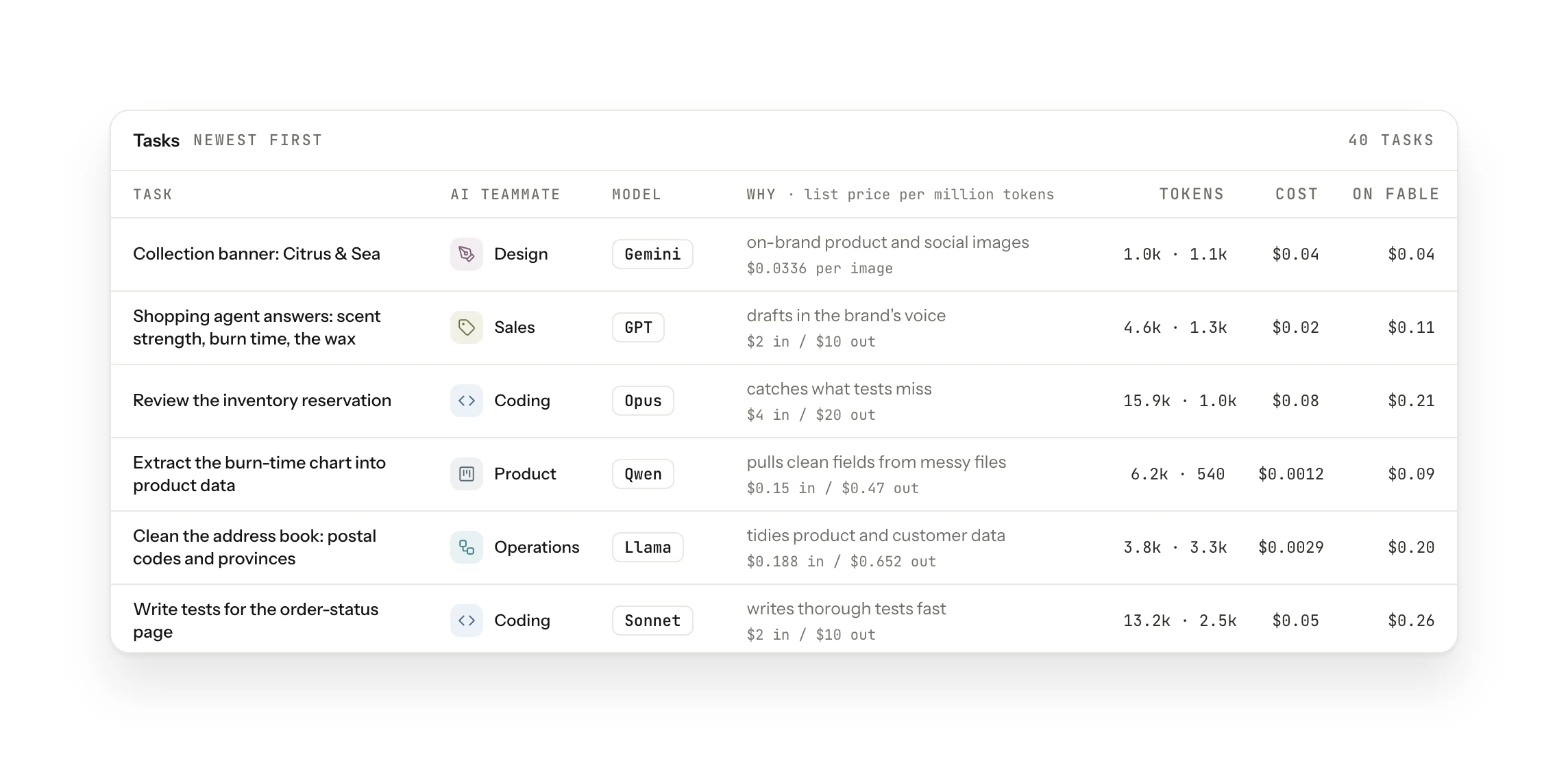
The record shows each change, why it was proposed, who approved it and what it cost. Measured results are added as they come in. Retries and failed checks are in it too.
In the example build, seventy-nine tasks failed a check and were re-routed. The record shows each retry and what it cost.
How it works
See what your AI team would build first.
Tell us what you want to build. Work on sponsored models is free.
Apply for access